
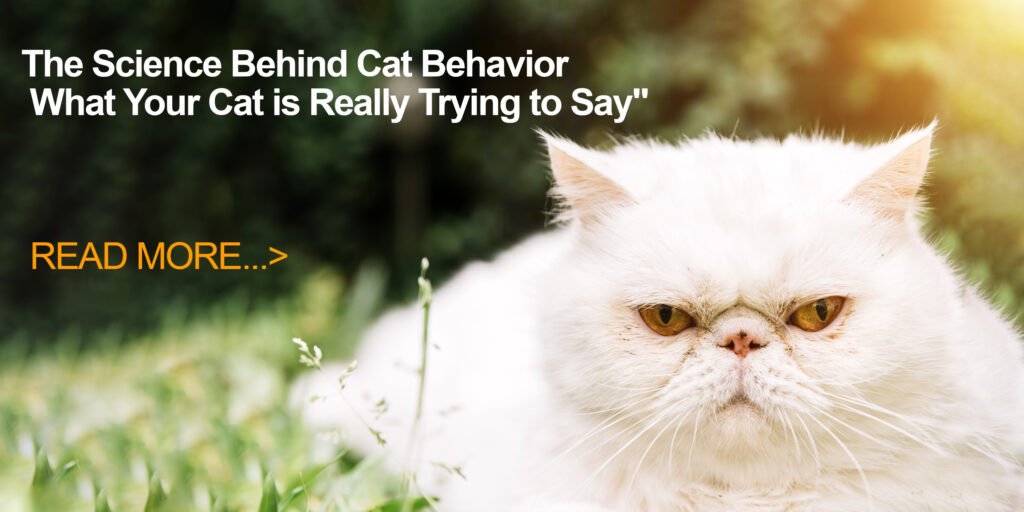
The Science Behind Cat Behavior What Your Cat is Really Trying to Say
Cats are animals with a mysterious side that share our homes with us after thousands of years. What is running through my cat’s mind every time it does something different? Seeing things from a scientific point of view about your cat can make your link stronger and communication easier.
1. Purring Does Not Express Happiness Alone
Most people who keep cats feel that purring is a sign of happiness, but studies suggest purring has more functions than that. Cats often purr as a sign of relaxation when they go through tough times. It has been shown that the purr of a cat (between 25 and 150 Hz) can help heal injured tissues and bring down inflammation. When your cat lies in your lap, it could just feel safe, though it may also try to calm itself or recover from some discomfort.
2. Cat blinking slowly is their way to express love
Slowly blinking their eyes while looking at you is known as a ”slow blink.” Experts believe that this behavior means the pet trusts and likes its owner. Slow blinking by animals in nature is not considered threatening for others. Try to blink at your cat slowly, because doing so will tell them you care and help them feel calm.
3. Comfortably Kneading and Firmly Sitting
The paw presses on your lap that your cat does are known as kneading. Kittens show this behavior during the nursing stage because kneading mom’s belly helps them to receive milk. When adults cats knead, it usually means they are relaxed and calm. It is also worth mentioning that cats’ paws contain scent glands. This means that by kneading, cats mark the territory as theirs and leave their scent for their favorite owner.
4. What You Can Learn From the Position of the Tail
A cat uses its tail to share its mood and warn people. A cat carrying its tail in the air tends to feel secure and content. A low or tucked tail usually shows that the animal is afraid or submissive. If the tail is standing straight up, your cat feels frightened. Check your cat’s tail to get a clearer idea of the mood it is in.
5. Greetings that include head butting and rubbing are friendly
As soon as your cat bumps its head or licks your face, you notice its affection and smell coming from it. Such behavior indicates that they treat you as if you belong to their group, which feline behavior displays as a huge praise.
6. What is the Reason for the Zoomies Burst of Energy?
When your cat suddenly darts in high speed around the house, this is what people usually call “zoomies.” Such behavior happens because animals are driven to hunt and have extra energy. Having a regular routine of playing and thinking games can control your pet’s zoomies.
7. Meowing is a way for cats to talk with humans.
Adult cats are very unlikely to meow when they want to communicate with other cats. Meowing is mostly done to communicate with people. Changes in a baby’s tone and how loud they are can show if they need food, need someone’s attention, or are feeling uncomfortable. Noticing the differences in your cat’s meows allows you to respond properly to them.
8. Octopuses prefer to hide when they are safe or comfortable.
Since cats are like both predators and prey in the wild, they use hiding as a way to feel secure. Hiding behavior in cats may show that they are afraid, not feeling well, or just like being by themselves. Give your cat suitable and secure spaces to hide away in the house.
Final Thought
Learning about Cat Behavior gives you a different view of your pet. The way your cat moves or makes a noise can let you know what is on their mind. If you focus on these signs, your relationship with your family will improve.